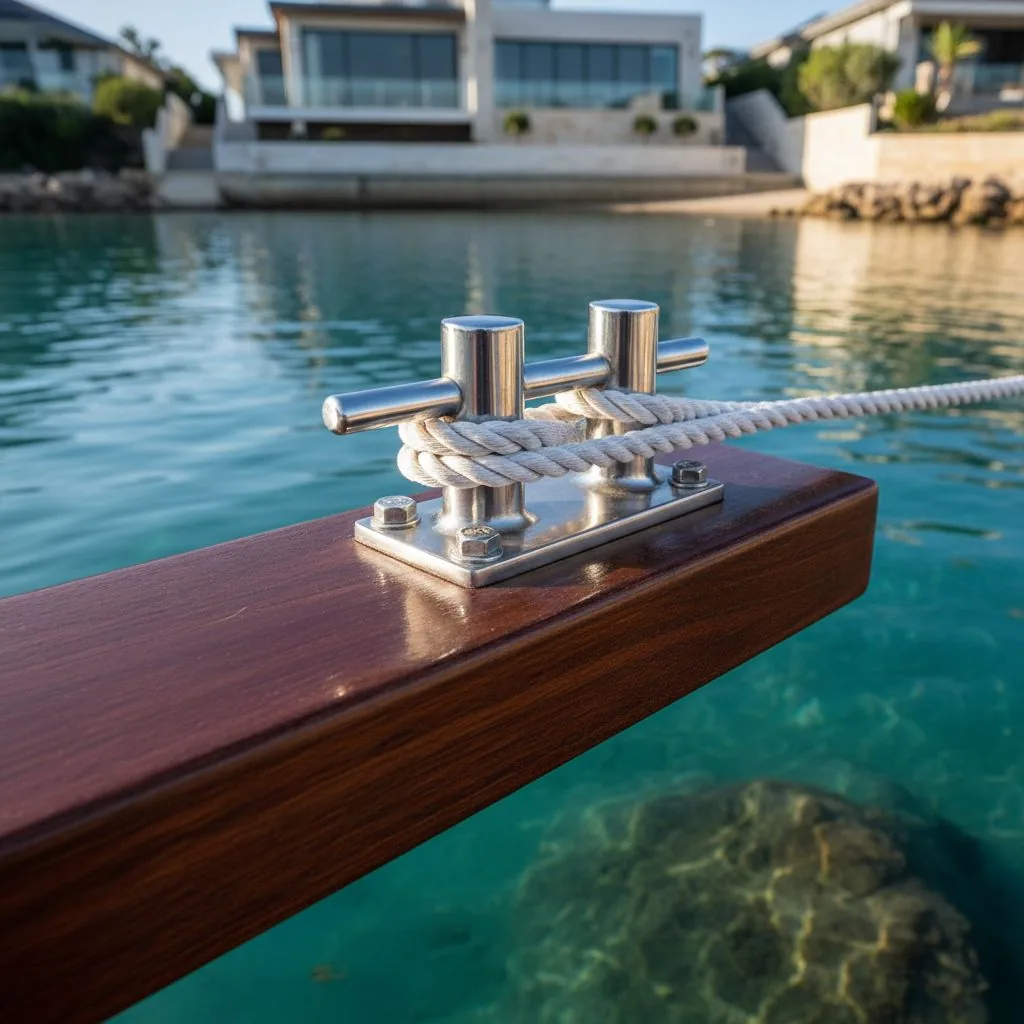
Separate cushioning from restraint
A fender arrangement addresses contact between the vessel and the berth. A mooring arrangement restrains the vessel through its nominated attachment system. They interact, but they are not interchangeable. Extra padding does not establish that an attachment is adequate, and a larger cleat does not resolve an unsuitable contact position. Ask the specialist to describe the job of each component in the proposed arrangement before comparing individual products.
Record what prompted the enquiry. There may be marks on the hull, a worn bumper, an awkward line route or concern about an existing fitting. Describe the visible observation without deciding the cause. A photograph of a damaged edge is useful context, but it cannot establish the condition of hidden fixings or the forces involved. Do not reproduce the event by pushing the boat against the structure or pulling on a suspect fitting.
The first useful outcome is a scope statement. It should identify whether the investigation concerns routine contact protection, a changed vessel, a damaged attachment or an altered pontoon configuration. These lead to different questions. Keeping the purpose clear prevents a small cosmetic replacement from being treated as a complete assessment of the mooring system. If the structure or attachment is suspect, keep people away from the affected area and arrange professional advice.
Identify the actual contact area on the vessel
Supply information about the vessel’s hull shape and the part of it expected to sit alongside. Existing photographs taken safely during normal use may show where protection has been placed. Label anything that has changed since the photographs were taken, including a different vessel, altered equipment or a modified pontoon edge. The specialist should confirm the relevant contact geometry rather than assume that a bumper at a familiar height will suit every boat.
Ask how the proposed fender arrangement relates to the boarding opening and any projecting equipment. Protection should be considered with the complete berth drawing. A thick edge treatment may change the separation people have to cross when boarding, while a fitting near a platform or hull detail may create a different contact problem. These are reasons for coordinated design, not reasons for an owner to choose a thinner or thicker product by guesswork.
Record whether marks appear at one location or along a wider area, and whether their timing is known. An observation such as “this mark was first noticed after the last visit” is more reliable than a claim that it was definitely caused by a particular wake. Keep uncertainty in the record. The designer can then decide what additional inspection, vessel information or site assessment is needed before attributing the problem to a component.
Ask how the attachment connects to supporting structure
When a cleat is replaced, the question extends beyond the visible fitting. Ask the contractor to identify the supporting member, the proposed connection detail and the basis for retaining the material around it. A stronger-looking replacement does not by itself demonstrate that the existing support can perform the intended role. The designer needs to consider the complete connection for the nominated vessel and site, including how it relates to the rest of the pontoon.
An owner can gather previous drawings, product information and photographs of past work. Hidden backing, embedded items or underside access should be assessed by the contractor using a suitable method. Do not remove a fitting, crawl beneath a deck or reach under the pontoon to look for a plate. If access is needed, it belongs in the professional scope so the proposed assessment has the resources and work method required.
Request that the written proposal distinguishes replacement of the visible cleat from repair of its supporting structure. If the supporting material cannot yet be assessed, have that uncertainty stated along with the decision point for resolving it. This makes a provisional scope understandable. It also avoids a situation in which an attractive new fitting conceals an unresolved question that was outside the installer’s original brief.
Specify a compatible assembly, not a metal label
Product descriptions often emphasise a material grade or finish. That is useful information, but it does not specify the entire installed assembly. Ask for the fitting, fasteners, backing arrangement, contact surfaces and any isolation detail to be identified together. The supplier and designer should confirm compatibility with the pontoon system and the proposed use. Do not substitute a different fastener or coating because it appears similar or is available sooner.
Where an older installation contains a mixture of materials, provide records rather than guessing their composition from colour. Surface appearance is not a reliable material certificate. Photographs can show the location and visible condition, while the appropriate specialist determines what further identification is needed. The same care applies to a reused fitting: it should have a stated assessment and acceptance basis, not an assumption that polished means serviceable.
Discuss replaceability before approving an edge treatment or fitting. Ask how a worn component will be identified and changed without unnecessary disturbance of adjacent parts. Bellingham Marine’s manufacturer design-options publication treats fendering and cleats as configurable parts of a dock system. That supports a system-level discussion, but its product examples do not specify your Gold Coast berth. Obtain the details for the actual system being proposed, including which changes require the designer’s review.
Coordinate line routes with the walking route
Ask for the intended attachment locations to appear on the same plan as the gangway, boarding point and pedestrian route. A line that crosses a circulation area is an operational concern even when the fitting itself looks neatly positioned. The vessel operator and marine designer should agree the appropriate arrangement. This guide does not provide a line pattern or knot sequence, because those instructions need to match the vessel and conditions.
Include the positions of service outlets and storage. People should not have to move through an attachment area simply to reach an everyday item. Likewise, a locker lid or hose reel should not be chosen before checking its relationship to the planned mooring arrangement. A drawing with the boat absent can hide these conflicts. Review the occupied configuration and ask which zones need to stay clear during normal use.
For a hypothetical refurbishment, imagine an owner wanting a cleat shifted so a new cupboard can sit flush against the deck edge. The shift might improve storage while changing the intended restraint geometry and support location. Treat that as a design change requiring review, not a minor positioning preference for the installer to decide on the day. Agree the layout before fixing locations are committed, and record any later change on the final drawing.
Use damage records without turning them into a test
If an existing fitting has moved, cracked its surroundings or left visible distortion, provide photographs from a safe location and explain when the change was noticed. Do not pull on it to see whether it moves again. A component that appears stable at rest has not thereby demonstrated capacity. The specialist should decide whether the area needs to remain out of use and what investigation is appropriate.
Separate observations by component. A frayed-looking rope, marked hull, damaged bumper and split timber may be part of the same event, but they need individual records. Give each photograph a location label so the assessor can connect it with the berth sketch. State whether the boat was present when the issue was noticed and whether the attachment or vessel has changed since. Avoid assigning a load, cause or age to damage that has not been professionally assessed.
Where the cause remains uncertain, ask what evidence would distinguish the possible explanations. The answer may involve inspection of concealed support, review of the original design or confirmation of vessel details. A good brief allows the assessor to specify that next step. It does not pressure them to select a replacement product from photographs alone. Keep the existing arrangement unchanged unless the responsible professional gives a safe management instruction.
Plan replacement around a managed vessel arrangement
Fender or cleat work can affect the boat even when the deck remains largely intact. Before booking the work, establish who will manage the vessel and whether it needs to move. The contractor and vessel operator should agree how the work area will be made available. Do not untie or shift the boat yourself in response to an assumed construction sequence, particularly if attachments are damaged or the structure is closed.
Ask what parts of the system will be unavailable at each stage and how that will be communicated. A replacement may require access behind an edge or beneath a fitting that is normally hidden. The work method, temporary arrangements and conditions for returning the berth to use should be explicit. An owner’s scheduling note should include boat service appointments, visitors and other activities that depend on that berth during the proposed work period.
Discuss what happens if opening the connection exposes unexpected deterioration. The scope should establish who reviews the finding, how additional work is authorised and what happens to the vessel while the decision is pending. This is a practical dependency, not an invitation to keep using an incomplete installation. A planned alternative arrangement gives the project time to resolve the support properly instead of treating the visible fitting as the only task that must be finished.
Keep a component record at handover
Request the final attachment locations, product identifiers and the relevant design or installation documents. A component record is useful when a service provider later needs to source a compatible replacement or understand a concealed connection. Include photographs of work that becomes hidden, where the contractor has safely documented it. The owner should not need to dismantle the finished installation to reconstruct what was installed.
Ask for the inspection and maintenance instructions applicable to the actual fender and fitting system. These should distinguish owner observations from tasks needing specialist access or assessment. If a product has replacement criteria, obtain the manufacturer’s instructions rather than relying on a general age estimate. Record who should be contacted after a changed vessel, an impact or a visible movement of the attachment, and what use restrictions apply while advice is sought.
Finish by checking that the nominated vessel and berth layout still match the installed arrangement. A last-minute shift of an attachment or change of edge profile should be reflected in the final documents and reviewed by the responsible person. The checklist below helps prepare that conversation. Checking every item means the information is organised; it cannot rate a mooring system or establish that a particular cleat is safe to use.
Prepare your discussion notes
Record locations and questions from land or existing documents. Never load-test a fitting or enter an unsafe position to complete these notes.
Technical background: Bellingham Marine dock customization options. Reference checked 22 September 2026 for the mooring fittings discussion.